
Written by Joshua Mull, Licensed Commercial Insurance Agent
Lighthouse Agency Insurance | Last Updated: June 2026
Pricing benchmarks in this guide are based on Lighthouse Agency Insurance’s quoting data across multiple Ohio insurance carriers as of 2026.
Who This Guide Is For
This guide is written for Ohio contractors looking to understand current insurance costs and coverage requirements, including:
- Handymen
- Electricians
- Plumbers
- Landscapers
- Painters
- Remodelers
- General Contractors
- Commercial Contractors
If you’re trying to determine what contractor insurance should cost in Ohio and whether you’re paying a fair rate, this guide is for you.
Key Takeaways
- Most Ohio contractors pay between $800 and $25,000+ annually for insurance depending on trade, payroll, vehicles, and operations.
- General liability insurance typically costs between $800 and $10,000+ per year depending on contractor classification.
- Ohio contractors purchase workers compensation through the Ohio Bureau of Workers’ Compensation (BWC) rather than private insurance carriers.
- Payroll, claims history, and commercial vehicles are often the biggest cost drivers.
- The cheapest insurance policy is rarely the best policy. Coverage gaps discovered during a claim can cost far more than premium savings.
Short Answer
If you’re an Ohio contractor, you’ve probably searched online looking for a straightforward answer:
“How much does contractor insurance cost?”
Unfortunately, most insurance websites avoid giving actual numbers.
The truth is contractor insurance costs vary significantly based on the type of work you perform, your payroll, claims history, vehicles, and coverage requirements.
Still, understanding realistic pricing ranges can help you budget appropriately and avoid overpaying for coverage.
At Lighthouse Agency Insurance, we work with contractors across Ohio and have used real quoting data from multiple insurance carriers to develop the pricing benchmarks you’ll find below.
Contractor insurance in Ohio can cost anywhere from $800 per year for a sole proprietor handyman to $25,000+ annually for larger contractors with employees, vehicles, workers compensation exposure, and higher-risk operations.
Most contractors fall somewhere in between.
The cost of contractor insurance depends on factors such as:
- Type of work performed
- Annual payroll
- Gross revenue
- Number of employees
- Claims history
- Commercial vehicles
- Use of subcontractors
- Coverage limits
- Contract requirements
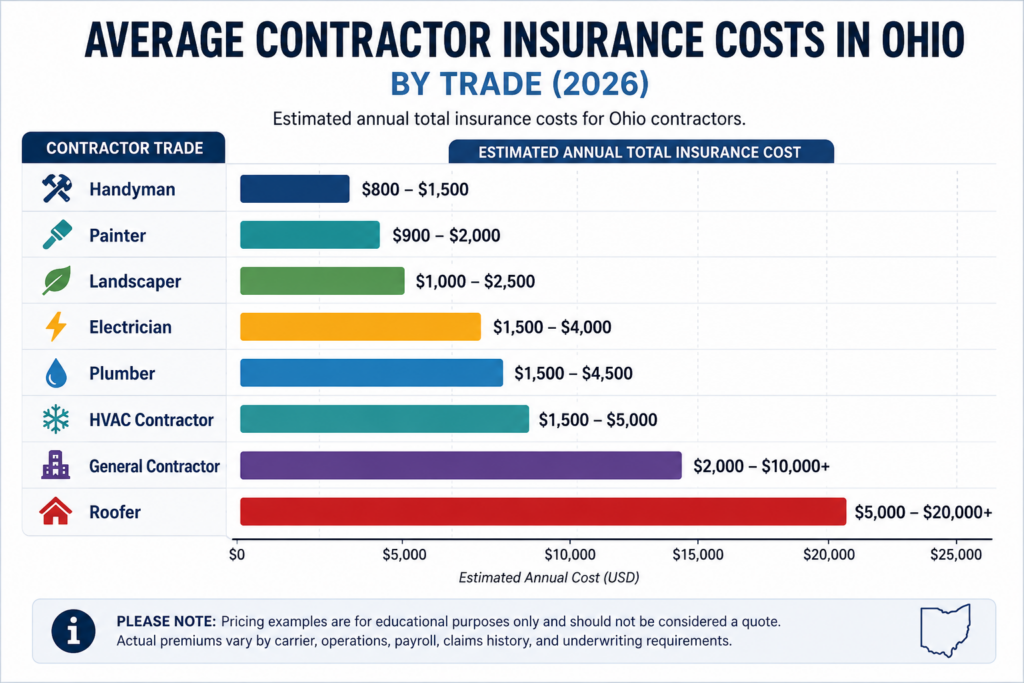
Typical Contractor Insurance Costs in Ohio
| Contractor Type | Estimated Annual Insurance Cost |
|---|---|
| Handyman | $800–$1,500 |
| Painter | $900–$2,000 |
| Landscaper | $1,000–$2,500 |
| Electrician | $1,500–$4,000 |
| Plumber | $1,500–$4,500 |
| General Contractor | $2,000–$10,000+ |
| Roofer | $5,000–$20,000+ |
Pricing examples are for educational purposes only and should not be considered a quote. Actual premiums vary by carrier, operations, payroll, claims history, and underwriting requirements.
What Ohio Contractors Typically Pay for Contractor Insurance
Based on contractor quotes Lighthouse Agency Insurance reviews throughout Ohio, these ranges are common:
| Contractor Profile | Typical Annual Insurance Cost |
| Sole Proprietor Contractor | $1,500–$4,000 |
| Contractor with Several Employees | $5,000–$15,000 |
| Established Contractor with Vehicles and Payroll | $10,000–$25,000+ |
| Larger Commercial Contractors | $25,000+ |
These figures may include combinations of:
- General Liability
- Commercial Auto
- Workers Compensation
- Inland Marine
- Umbrella Liability
Actual costs depend on your operations, payroll, claims history, and contractual requirements.
Why Contractor Insurance Costs Vary So Much
One of the biggest misconceptions we hear from contractors is:
“What is the standard rate for contractor insurance?”
The reality is there isn’t one.
Insurance companies evaluate risk based on dozens of factors, including:
- Classification codes
- Type of work performed
- Employee count
- Payroll
- Annual revenue
- Years in business
- Prior claims
- Vehicle exposure
- Project size
- Contract requirements
For example, a handyman performing residential repairs presents a very different risk than a roofing contractor working three stories above the ground.
Similarly, an electrical contractor carries different exposures than a landscaping company.
That’s why contractor insurance pricing can vary so dramatically.
What Makes Contractor Insurance More Expensive?
Several factors can significantly increase premiums.
Higher-Risk Trades
Trades such as:
- Roofing
- Structural steel work
- Excavation
- Electrical contracting
- Heavy construction
typically generate higher insurance costs due to increased claim severity.
Growing Payroll
Workers compensation premiums are largely based on payroll. As your company grows and hires employees, insurance costs typically increase as well.
Poor Claims History
Insurance carriers heavily weigh prior claims.
Frequent claims can result in:
- Higher premiums
- Reduced carrier options
- Non-renewal concerns
Vehicle Exposure
Contractors operating multiple trucks, trailers, or service vehicles often experience some of the largest premium increases.
Contract Requirements
Many commercial projects require:
- Additional insured endorsements
- Waivers of subrogation
- Primary and non-contributory wording
- Higher liability limits
These requirements can impact total insurance costs.
General Liability Insurance Cost
General liability insurance is typically the foundation of a contractor’s insurance program.
It helps protect against claims involving:
- Property damage
- Bodily injury
- Completed operations
- Legal defense costs
How Much Liability Insurance Should Ohio Contractors Carry?
One of the most common questions we hear isn’t just:
“How much does contractor insurance cost?”
“How much insurance do I actually need?”
For many Ohio contractors, a standard starting point includes:
- $1 million per occurrence
- $2 million aggregate
However, many commercial projects, municipalities, property managers, and general contractors require higher limits.
You may also encounter requirements for:
- Additional insured endorsements
- Waivers of subrogation
- Primary and non-contributory wording
- Umbrella liability coverage
Before purchasing coverage solely based on price, review any current or upcoming contract requirements. A lower-priced policy that fails to meet project requirements can ultimately become more expensive than purchasing the correct coverage from the beginning.
Workers Compensation Costs in Ohio
Ohio is unique among most states because workers compensation coverage is purchased through the Ohio Bureau of Workers’ Compensation (BWC) rather than private insurance carriers.
This means Ohio contractors cannot shop workers compensation among private carriers the way they can for general liability or commercial auto coverage.
BWC premiums are primarily influenced by:
- Payroll
- Job classifications
- Claims history
- Experience modification rating (EMR)
- Participation in group rating and safety programs
Many contractors unknowingly overpay because payroll classifications are inaccurate or haven’t been reviewed in years.
Periodic workers compensation audits and classification reviews can often uncover opportunities for savings.
At Lighthouse Agency Insurance, we regularly help Ohio contractors review BWC classifications and prepare for annual audits.
Commercial Auto Insurance Costs
Many contractors underestimate their commercial auto exposure.
Commercial auto premiums are influenced by:
- Vehicle type
- Driver records
- Radius of operation
- Vehicle value
- Number of vehicles
- Prior claims
For many contractors, commercial auto insurance has become one of the fastest-rising insurance expenses in recent years.
Umbrella Liability Insurance Costs
Many contractors discover they need umbrella liability coverage after reviewing a project contract.
Common requirements include:
- $1 million general liability limits
- $2 million aggregate limits
- Additional insured status
- Umbrella liability coverage
Most umbrella policies range from approximately $500 to several thousand dollars annually, depending on the type of work performed and limits selected.
Tools, Equipment, and Inland Marine Coverage
Many contractors assume their tools are automatically covered.
In reality, standard policies often exclude many tools and equipment exposures.
Coverage may protect:
- Power tools
- Diagnostic equipment
- Jobsite equipment
- Trailers
- Specialized contractor equipment
Premiums depend largely on the total value insured.
Real-World Contractor Insurance Examples
Example #1: Ohio Handyman
Business Profile
- $90,000 annual revenue
- No employees
- One work truck
Estimated Annual Costs
- General Liability: $900–$1,400
- Commercial Auto: $1,200–$2,000
Estimated Total: $2,100–$3,400 annually
Example #2: Residential Electrical Contractor
Business Profile
- $1.2 million annual revenue
- Eight employees
- Three service vehicles
Estimated Annual Costs
- General Liability: $2,500–$4,500
- Workers Compensation: Varies by payroll
- Commercial Auto: $3,000–$7,000
Estimated Total: $8,000–$18,000+ annually
Example #3: Growing General Contractor
Business Profile
- $5 million annual revenue
- Multiple crews
- Commercial projects
Potential Insurance Program
- General Liability
- Workers Compensation
- Commercial Auto
- Umbrella Liability
Estimated Total: $15,000–$25,000+ annually
Example #4: HVAC Contractor
Business Profile
- $1.5 million annual revenue
- 10 employees
- 5 service vehicles
- Residential and light commercial work
Estimated Annual Costs
- General Liability: $2,000–$5,000
- Workers Compensation: Varies by payroll
- Commercial Auto: $4,000–$8,000
- Tools & Equipment Coverage: $500–$2,000
Estimated Total: $8,000–$20,000+ annually
Common Contractor Insurance Mistakes
Buying Based Solely on Price
The cheapest policy often creates the largest coverage gaps. Can you afford to pay for downtime or a claim out of pocket?
Not Understanding Contract Requirements
Many contractors discover coverage deficiencies only after receiving a contract.
Ignoring Workers Compensation Reviews
Incorrect BWC classifications can become extremely costly over time.
Using Personal Auto Insurance
Personal auto policies may not properly cover business-related exposures.
Waiting Until a Certificate Is Requested
Waiting until the last minute often limits available options and creates unnecessary stress.
Why Working With a Contractor-Focused Agency Matters
Contractor insurance isn’t simply about obtaining a certificate of insurance.
It’s about understanding:
- Contract requirements
- Coverage gaps
- Claims exposures
- Risk management strategies
- Workers compensation classifications
- Bonding considerations
A policy that appears inexpensive today can become extremely costly if it fails to respond properly during a claim.
Get a Contractor Insurance Review
If you’re a contractor in Ohio and want to understand what coverage you actually need — and what it should realistically cost — our team at Lighthouse Agency Insurance can help.
We’ll review your current insurance program, identify potential coverage gaps, explain contract requirements, and compare options from multiple carriers.
About the Author
Joshua Mull is a licensed commercial insurance agent with Lighthouse Agency Insurance. He specializes in helping Ohio contractors evaluate risk, understand coverage requirements, and secure insurance programs that align with their business operations and contractual obligations.
Lighthouse Agency Insurance serves contractors throughout Ohio, providing guidance on general liability, commercial auto, workers compensation, umbrella liability, and contractor risk management solutions.